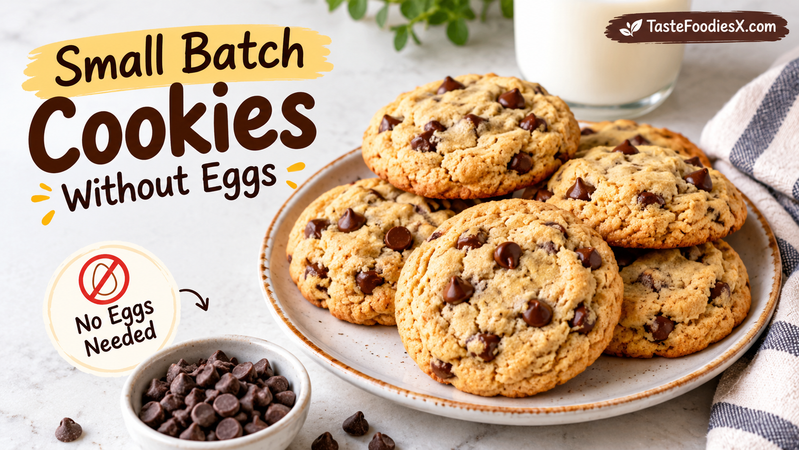
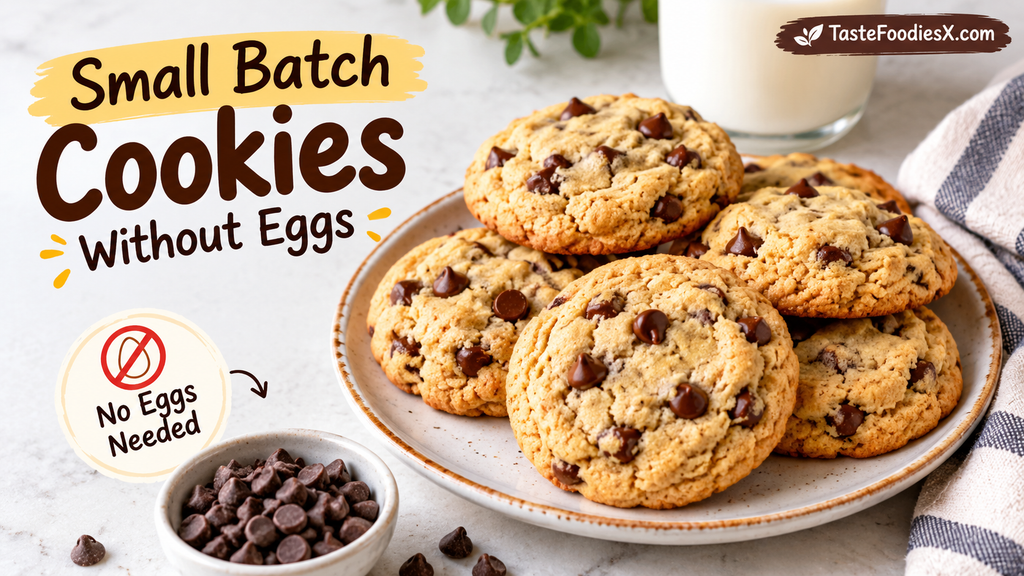
Sometimes you want homemade cookies, but you do not want to make a huge batch. Maybe you are baking for yourself, two people, or simply want something sweet without ending up with a container full of leftovers. That is where small batch cookies without eggs come in handy.
This easy cookie recipe makes a small number of delicious cookies using simple ingredients you probably already have in your kitchen. There are no eggs required, and you do not need any special equipment. The cookies are buttery, lightly crisp around the edges, and soft in the center.
Whether you ran out of eggs, have an egg allergy, or simply want a quick dessert, these small batch cookies without eggs are worth trying.
Why Make Small Batch Cookies Without Eggs?
Traditional cookie recipes often call for one or two eggs, even when you only want a few cookies. Using a whole egg in a small recipe can be tricky because it adds a significant amount of moisture and fat.
An eggless small batch recipe solves that problem.
You get enough cookie dough for a small serving without having to measure half an egg or save the other half for later. It is especially useful when you have a cookie craving but do not want to spend an hour baking.
These cookies are also great for:
- Small families
- Couples
- Students
- Late-night dessert cravings
- Egg-free baking
- Quick afternoon treats
- Portion-controlled baking
- Using basic pantry ingredients
The best part is that the recipe is flexible. You can add chocolate chips, chopped nuts, sprinkles, or even a little cinnamon to make the cookies your own.
Ingredients for Small Batch Cookies Without Eggs
You only need a handful of everyday ingredients to make these cookies.
All-Purpose Flour
All-purpose flour provides the structure for the cookies. Measure the flour carefully because adding too much can make your cookies dry or crumbly.
For the most accurate result, use a spoon to lightly fill your measuring cup and level the top rather than packing the flour down.
Butter
Butter gives the cookies their rich flavor and tender texture. Use softened butter rather than completely melted butter.
If the butter is too warm or liquid, the cookies may spread too much while baking.
Granulated Sugar
Regular white sugar adds sweetness and helps the edges become lightly crisp.
You can also experiment with a mixture of white and brown sugar if you prefer cookies with a softer, chewier texture.
Milk
Because there is no egg in this recipe, a small amount of milk helps bring the dough together.
You only need a little. Add it gradually so the dough does not become too wet.
Vanilla Extract
Vanilla makes a simple cookie taste much more flavorful. Even a small amount can make a noticeable difference.
Baking Powder
Baking powder gives the cookies a little lift and helps prevent them from becoming overly dense.
Salt
A pinch of salt balances the sweetness and brings out the buttery flavor.
Optional Add-Ins
You can keep these cookies plain or add your favorite ingredients.
Try:
- Mini chocolate chips
- Chopped walnuts
- Pecans
- White chocolate chips
- Raisins
- Shredded coconut
- Cinnamon
- Sprinkles
How to Make Small Batch Cookies Without Eggs
The process is simple enough for beginner bakers.
1. Prepare the Oven
Preheat your oven to 350°F (175°C).
Line a small baking sheet with parchment paper. If you do not have parchment paper, lightly grease the baking sheet.
Preheating the oven is important because the cookies should go into a properly heated oven. If the oven is still warming up, the dough may spread differently and the texture can change.
2. Cream the Butter and Sugar
Place softened butter and sugar in a small mixing bowl.
Beat them together until the mixture looks smooth and creamy. You can use a hand mixer, but for such a small batch, a spoon or small whisk can work perfectly well.
You do not need to whip the mixture for several minutes. Just make sure the butter and sugar are evenly combined.
3. Add Vanilla and Milk
Add the vanilla extract and a small amount of milk.
Mix until combined.
If the mixture looks slightly separated, do not worry. Once the dry ingredients are added, the dough should come together.
4. Add the Dry Ingredients
In another small bowl, combine the flour, baking powder, and salt.
Gradually add the dry ingredients to the butter mixture.
Stir gently until a soft cookie dough forms.
Avoid overmixing. Once there are no large streaks of dry flour remaining, stop mixing.
5. Add Chocolate Chips or Other Extras
If you are making chocolate chip cookies, fold in a small handful of mini chocolate chips.
You can also divide the dough and make different flavors. For example, add chocolate chips to half and chopped nuts to the other half.
6. Shape the Cookies
Divide the dough into several equal portions.
Roll each portion into a ball and place it on the prepared baking sheet. Leave enough space between each cookie because they will spread as they bake.
Gently flatten the tops with your fingers or the bottom of a glass.
For thicker cookies, flatten them only slightly. For thinner, crispier cookies, press them a little more.
7. Bake
Bake the cookies for approximately 9 to 12 minutes, depending on their size and your oven.
Look for lightly golden edges. The centers may still look slightly soft when you remove the cookies.
Do not wait until the centers look completely firm. Cookies continue cooking from the residual heat of the baking sheet after they come out of the oven.
8. Let Them Cool
Leave the cookies on the baking sheet for about five minutes.
Then carefully transfer them to a cooling rack.
This short resting time allows the cookies to firm up without becoming hard.
What Do Eggless Cookies Taste Like?
You may wonder whether cookies without eggs taste different.
They can be just as satisfying as traditional cookies.
Eggs contribute moisture, structure, and richness to many cookie recipes. In a small batch recipe, however, butter and milk can provide enough moisture while flour and baking powder provide structure.
The finished cookies are generally tender with lightly crisp edges and a soft center.
The flavor depends heavily on the butter and vanilla you use, so good-quality ingredients can make a simple recipe taste surprisingly special.
Tips for Perfect Small Batch Cookies Without Eggs
Making a small recipe may seem easy, but a few small details can make a big difference.
Use Softened Butter
Soft butter mixes easily with sugar and helps create an even dough.
Do not microwave the butter until it becomes completely liquid. If you need to soften it quickly, cut it into small pieces and leave it at room temperature for several minutes.
Do Not Add Too Much Milk
Milk is mainly there to help bring the eggless dough together.
Start with a small amount. If the dough already holds together, you may not need any additional liquid.
Adding too much milk can make the dough sticky and cause excessive spreading.
Measure Flour Correctly
Too much flour is one of the easiest ways to end up with dry cookies.
If you have a kitchen scale, weighing the flour is ideal. Otherwise, use the spoon-and-level method.
Do Not Overbake
This is especially important for small cookies.
They can go from perfectly baked to dry surprisingly quickly.
Take them out when the edges are lightly golden and the centers still look a little soft.
Chill the Dough if Necessary
If your kitchen is warm and the dough feels very soft, place it in the refrigerator for about 15 to 30 minutes before baking.
Chilling helps solidify the butter and can reduce excessive spreading.
Easy Variations
One of the advantages of making small batch cookies without eggs is that you can customize the recipe without making a giant batch.
Small Batch Chocolate Chip Cookies
Fold mini chocolate chips into the dough.
Semi-sweet chocolate works particularly well because it balances the sweetness of the cookie.
For extra chocolate flavor, add a small amount of cocoa powder while slightly reducing the flour.
Cinnamon Sugar Cookies
Add a pinch of ground cinnamon to the dough.
Before baking, roll each dough ball in a mixture of cinnamon and sugar.
These cookies are simple but have a warm, comforting flavor.
Small Batch Nut Cookies
Chopped walnuts or pecans add crunch and a slightly toasted flavor.
Keep the pieces relatively small so they distribute evenly throughout the dough.
Coconut Cookies
Add shredded coconut for a chewy texture.
You can also combine coconut with chocolate chips for a dessert inspired by classic chocolate-coconut combinations.
Double Chocolate Cookies
For chocolate lovers, add cocoa powder and chocolate chips.
Because cocoa powder can absorb moisture, you may need a tiny amount of additional milk to achieve the right dough consistency.
Can You Make These Cookies Without Butter?
Yes, but the texture will change depending on what you use instead.
You can experiment with a neutral-flavored plant-based butter or another baking-friendly fat.
However, butter provides much of the flavor and texture in a simple cookie, so substitutions may produce cookies that are softer, less rich, or slightly different in how they spread.
If you are avoiding dairy as well as eggs, choose a suitable dairy-free butter and plant-based milk.
Can You Make Small Batch Cookies Without Eggs and Milk?
Yes.
If you need the cookies to be both egg-free and dairy-free, use a plant-based milk such as oat, soy, or almond milk and a dairy-free butter alternative.
Always check ingredient labels if you are baking for someone with a food allergy because ingredients and manufacturing practices can vary between brands.
How to Store Eggless Cookies
Once completely cooled, place the cookies in an airtight container.
They can generally stay at room temperature for several days.
For the best texture, keep the container tightly sealed. Exposure to air can cause homemade cookies to become dry or lose their crispness.
If you want to keep them longer, you can also freeze them.
Place the cooled cookies in a freezer-safe container or bag and separate layers with parchment paper.
Can You Freeze the Cookie Dough?
Absolutely.
Freezing cookie dough is particularly useful when you want freshly baked cookies later.
Shape the dough into individual portions before freezing. Place the portions on a tray and freeze them until firm. Then transfer them to a freezer-safe container or bag.
When you want cookies, you can bake only the amount you need.
Depending on your oven and the size of the dough portions, frozen dough may need a few additional minutes of baking time.
Common Problems and How to Fix Them
Why Did My Cookies Spread Too Much?
The butter may have been too warm, or the dough may have contained too much liquid.
Try chilling the dough before baking.
Also make sure your flour measurement is accurate.
Why Are My Cookies Too Dry?
Too much flour or overbaking is usually the main reason.
Measure the flour carefully and remove the cookies when the edges are lightly golden rather than waiting for the entire cookie to become firm.
Why Are My Cookies Crumbly?
Eggless cookie dough can sometimes become crumbly if there is not enough moisture.
Add a very small amount of milk and mix again. Avoid adding a lot at once.
Why Are My Cookies Too Soft?
If the cookies are soft immediately after baking, give them time to cool.
They often become firmer as they reach room temperature.
If they remain unusually soft, they may simply need another minute or two in the oven the next time you bake them.
Frequently Asked Questions
How many cookies does a small batch make?
The exact number depends on how large you make each cookie, but a small batch typically produces around 6 to 10 cookies.
That makes the recipe convenient when you only want enough dessert for a few people.
Can I make these cookies without eggs and baking soda?
Yes. Baking soda and baking powder are different ingredients, so a recipe can use baking powder instead of baking soda.
The final texture may be slightly different, but you can still make delicious cookies.
Can I use brown sugar?
Yes. Brown sugar can add moisture and a deeper caramel-like flavor.
You can replace some or all of the white sugar, although the cookies may become softer and darker.
Can I make the dough ahead of time?
Yes. Store the covered dough in the refrigerator and bake it when needed.
If the chilled dough becomes very firm, let it sit at room temperature briefly before shaping.
Are these cookies suitable for an egg allergy?
A recipe made without eggs can be useful for people avoiding eggs, but if you are baking for someone with a serious allergy, check every ingredient and avoid cross-contact with eggs.
Why This Recipe Is Worth Keeping
There is something satisfying about a recipe that does exactly what you need without making things complicated.
These small batch cookies without eggs are perfect for those moments when a full baking project feels unnecessary. You can make a few cookies with basic ingredients, customize them with whatever you have available, and enjoy them while they are fresh.
They are also a practical way to reduce food waste. Instead of making several dozen cookies and trying to find room for them in the freezer, you can make just enough for today.
Whether you prefer classic vanilla cookies, chocolate chip cookies, cinnamon cookies, or something loaded with nuts, the basic eggless dough gives you a useful starting point.
The key is to keep the dough soft but not wet, avoid overmixing, and watch the baking time carefully.
Final Thoughts
If you have been looking for an easy dessert that does not require eggs, these small batch cookies without eggs are a great option. They are simple, adaptable, and perfect for a small household or an unexpected cookie craving.
You do not need complicated ingredients or professional baking equipment. With flour, butter, sugar, milk, vanilla, and a few basic pantry staples, you can make a fresh batch of homemade cookies without preparing a large quantity.
Once you get comfortable with the basic recipe, experiment with chocolate chips, cinnamon, coconut, nuts, or your favorite cookie additions. You may find that making a small batch becomes your favorite way to bake cookies.
Sometimes, you really only need a few warm homemade cookies—and that is exactly what this recipe is designed to deliver.