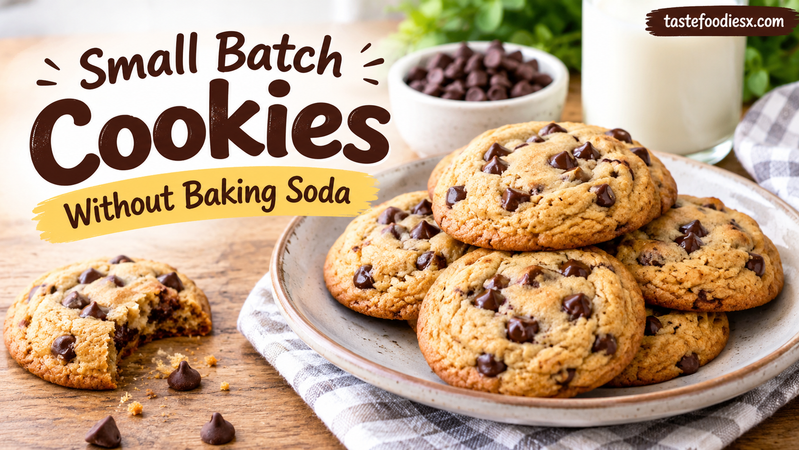
Sometimes you don’t need a huge batch of cookies. You just want a few warm, homemade cookies to enjoy with a cup of tea or coffee without ending up with a container full of leftovers. That’s where small batch cookies without baking soda come in handy.
This easy cookie recipe is designed for those moments when you want something sweet, simple, and homemade without using baking soda. The cookies have lightly crisp edges, soft centers, and plenty of buttery flavor. Since the recipe makes a small amount, it is also perfect for couples, small families, students, or anyone who enjoys freshly baked cookies without a lot of extra work.
The best part is that you don’t need complicated ingredients or special baking equipment. With a few pantry staples, you can have a small batch of delicious cookies ready in no time.
Why Make Small Batch Cookies Without Baking Soda?
There are plenty of reasons to make cookies without baking soda. Maybe you’ve run out of baking soda, you prefer a simpler recipe, or you simply want to experiment with a different cookie texture.
Traditional cookie recipes often use baking soda as a leavening ingredient. However, it isn’t absolutely necessary for every type of cookie. Depending on the recipe, cookies can still turn out delicious without it.
These small batch cookies without baking soda are especially useful because you only need a small quantity of ingredients. You don’t have to measure a large amount of flour, use several eggs, or worry about having too many cookies sitting around.
They’re also easy to customize. You can add chocolate chips, chopped nuts, white chocolate, coconut, or even a little cinnamon to create your own favorite version.
Ingredients for Small Batch Cookies Without Baking Soda
You only need a handful of basic ingredients for this recipe. Most of them are probably already sitting in your kitchen.
Butter
Butter provides richness and gives the cookies their classic homemade flavor. For the best texture, use softened unsalted butter. Soft butter mixes easily with sugar and helps create a smooth cookie dough.
If you only have salted butter, you can use it and slightly reduce or skip any additional salt in the recipe.
Sugar
Granulated sugar adds sweetness and helps create lightly crisp edges. You can also experiment with brown sugar if you prefer a softer and chewier cookie.
A combination of white and brown sugar can create a nice balance between crispness and chewiness.
Egg Yolk
Because this is a small batch recipe, using a whole egg can sometimes add too much liquid. An egg yolk is a convenient way to add richness without making the dough too wet.
The yolk also contributes to a tender, satisfying texture.
Vanilla Extract
Vanilla extract adds warmth and depth to the flavor. Even though you only need a small amount, it makes a noticeable difference.
All-Purpose Flour
Regular all-purpose flour works perfectly for these cookies. Measure the flour carefully because adding too much can make the cookies dry or dense.
For the most consistent results, spoon the flour into your measuring cup and level the top rather than scooping directly from the flour container.
Salt
A small pinch of salt balances the sweetness and brings out the buttery flavor.
Chocolate Chips
Chocolate chips are optional, but they make these cookies especially delicious. Semi-sweet chocolate chips work well, although milk chocolate, dark chocolate, or chopped chocolate can also be used.
How to Make Small Batch Cookies Without Baking Soda
Making these cookies is straightforward. You don’t need an electric mixer if you prefer to make them by hand.
Step 1: Prepare the Oven
Start by preheating your oven to 350°F (175°C). Line a small baking sheet with parchment paper.
Preheating is important because cookies need to go into a properly heated oven. If the oven is still warming up, the cookies may spread differently and the final texture can change.
Step 2: Cream the Butter and Sugar
Place softened butter and sugar in a small bowl. Mix until the butter and sugar become smooth and creamy.
You don’t have to whip the mixture for several minutes. Since this is a small batch, mixing until everything is well combined is usually enough.
Step 3: Add the Egg Yolk and Vanilla
Add one egg yolk and a little vanilla extract. Stir until the mixture is smooth.
At this stage, the dough should smell wonderfully buttery and sweet.
Step 4: Add the Dry Ingredients
Add the all-purpose flour and a pinch of salt. Mix gently until the ingredients come together and form a soft cookie dough.
Avoid overmixing once the flour has been added. Overworking cookie dough can make the finished cookies tougher than you want.
Step 5: Add Chocolate Chips
Fold in your chocolate chips. You can add as many or as few as you like.
For a small batch, around ¼ to ⅓ cup of chocolate chips is generally enough to give every cookie plenty of chocolate without overpowering the dough.
Step 6: Shape the Cookies
Divide the dough into small portions and place them on the prepared baking sheet.
Leave some space between each cookie because they will spread during baking.
For thicker cookies, gently shape the dough into taller balls. For thinner, crispier cookies, slightly flatten them before baking.
Step 7: Bake
Place the baking sheet in the preheated oven and bake until the edges are lightly golden and the centers look set but still slightly soft.
Because oven temperatures vary, start checking the cookies toward the end of the recommended baking time.
You don’t want to overbake them. Cookies often continue cooking slightly from the residual heat of the baking sheet after they come out of the oven.
Step 8: Cool
Allow the cookies to cool on the baking sheet for a few minutes before transferring them to a cooling rack.
They may seem very soft when they first come out of the oven, but they will firm up as they cool.
What Makes These Cookies Different?
The absence of baking soda gives these cookies a slightly different character from traditional chocolate chip cookies.
Instead of relying heavily on chemical leavening, this recipe focuses on the balance of butter, sugar, flour, and egg yolk.
The result can be a cookie with a pleasant buttery texture and relatively little puffiness. If you enjoy cookies that are simple, rich, and not overly cakey, this style is worth trying.
Another advantage is that you don’t need to keep baking soda on hand specifically for this recipe.
Tips for Perfect Small Batch Cookies
A few simple tricks can make a big difference.
Use Softened Butter
Butter should be soft enough to mix easily but not completely melted.
Melted butter can cause cookies to spread more quickly, while very cold butter can make the dough difficult to combine.
Measure Flour Carefully
Too much flour is one of the most common reasons homemade cookies become dry.
If possible, use a kitchen scale. If you’re using measuring cups, spoon flour into the cup and level it with a knife.
Don’t Overbake
For soft-centered cookies, remove them when the edges are lightly golden while the centers still look slightly soft.
If you wait until the entire cookie looks completely firm inside the oven, they may become hard after cooling.
Chill the Dough If Necessary
If your kitchen is warm and the dough feels very soft, refrigerate it for about 15 to 30 minutes before baking.
Chilling helps the butter firm up and can reduce excessive spreading.
Use Good Chocolate
Chocolate is one of the main flavors in a simple cookie recipe, so good-quality chocolate can make a noticeable difference.
You can use chocolate chips or chop a chocolate bar into small pieces for irregular pockets of melted chocolate.
Can You Make Cookies Without Baking Soda?
Yes, you can make delicious cookies without baking soda.
Baking soda is commonly used in cookie recipes, but it isn’t required for every cookie formula. The final result depends on the combination and proportions of ingredients.
When baking without baking soda, you shouldn’t necessarily expect the exact same texture as a traditional baking-soda cookie. Instead, you can create a cookie with its own appealing texture and flavor.
That’s why these small batch cookies without baking soda are a useful recipe to keep in your collection.
Can I Use Baking Powder Instead?
If you don’t have baking soda but do have baking powder, you may be able to use baking powder in certain cookie recipes. However, baking powder and baking soda are not identical ingredients and should not automatically be substituted in equal amounts.
Baking powder contains both an acid and a base, while baking soda is primarily sodium bicarbonate and requires an acidic ingredient to react effectively.
For this recipe, you can simply leave out baking soda rather than trying to make a direct substitution.
Variations to Try
One of the best things about a small batch cookie recipe is that you can easily experiment.
Small Batch Double Chocolate Cookies
Add a little unsweetened cocoa powder to the flour and mix in chocolate chips. This creates a rich chocolate cookie perfect for chocolate lovers.
Cinnamon Sugar Cookies
Skip the chocolate chips and add a little ground cinnamon. Before baking, roll the dough balls lightly in cinnamon sugar.
Peanut Butter Cookies
Add a spoonful of creamy peanut butter to the dough. You may need to adjust the flour slightly depending on the consistency.
White Chocolate Cookies
Replace regular chocolate chips with white chocolate chips. A small amount of chopped macadamia nuts also works beautifully.
Oatmeal Cookies
Add a modest amount of rolled oats for a heartier texture. Raisins or chocolate chips can be added as well.
Nutty Chocolate Cookies
Chopped walnuts, pecans, or almonds can add crunch and extra flavor.
How to Store Small Batch Cookies
If you somehow have cookies left after enjoying them fresh, store them in an airtight container at room temperature.
They are generally best within the first few days because that’s when their texture and flavor are at their freshest.
You can also freeze the baked cookies. Allow them to cool completely before placing them in a freezer-safe container or bag.
For longer storage, freezing the unbaked cookie dough is another convenient option.
Can You Freeze the Cookie Dough?
Absolutely. Small batches are particularly convenient for freezing because you can bake only what you want.
Shape the dough into individual balls and place them on a lined tray. Freeze until firm, then transfer them to a freezer-safe container.
When you want freshly baked cookies, place the frozen dough portions on a baking sheet and bake them. You may need to add a little extra baking time compared with fresh dough.
This method is perfect when you want a warm cookie without preparing an entire recipe from scratch.
Why Small Batch Baking Is So Convenient
Small batch baking is more than just a trend. It is a practical way to enjoy homemade treats without wasting ingredients.
A full cookie recipe can produce two or three dozen cookies. That’s wonderful for parties, holidays, or large families, but not always convenient when you’re baking for one or two people.
With small batch cookies without baking soda, you can satisfy a cookie craving without spending an entire afternoon baking.
It also gives you more freedom to experiment. If you want to try a new flavor, you don’t have to commit to a huge batch.
Common Mistakes to Avoid
Even simple cookie recipes can go wrong if a few details are overlooked.
Using melted butter: Unless the recipe specifically calls for it, very melted butter can make the cookies spread too much.
Adding too much flour: This can produce dry, crumbly cookies.
Overmixing: Once flour is added, mix only until the dough comes together.
Overbaking: Cookies can become much firmer as they cool.
Skipping oven preheating: Starting cookies in a cold oven can affect spreading and baking time.
Making oversized cookies: Very large cookies may bake unevenly, with edges becoming done before the centers.
Frequently Asked Questions
How many cookies does a small batch make?
Depending on the size of the dough portions, a small batch can usually make around 6 to 10 cookies. You can make fewer larger cookies or more smaller ones.
Can I make these cookies without eggs?
You can experiment with egg substitutes, but the texture may change. Egg yolk contributes richness and helps bind the dough, so replacing it can produce a different result.
Why are my cookies spreading too much?
Excessively soft butter, warm dough, too little flour, or a hot baking sheet can all contribute to excessive spreading. Try chilling the dough before baking.
Why are my cookies too dry?
Too much flour or overbaking are the most common causes. Measure flour carefully and remove the cookies when the centers are still slightly soft.
Can I use brown sugar?
Yes. Brown sugar can give cookies a deeper flavor and a softer, chewier texture. You can use it alone or combine it with white sugar.
Do I need to chill the dough?
Not always. If the dough holds its shape and your kitchen isn’t particularly warm, you can bake it immediately. Chilling is helpful when the dough feels very soft.
Final Thoughts
These small batch cookies without baking soda are a simple answer to those moments when you want homemade cookies without making a giant batch. They require everyday ingredients, minimal preparation, and no complicated techniques.
Whether you’re baking for yourself, sharing with a partner, or simply want a quick homemade dessert, this recipe is easy to adapt. Add chocolate chips, nuts, cinnamon, coconut, or your favorite mix-ins to make the cookies your own.
The key to delicious results is simple: measure the ingredients carefully, don’t overmix the dough, and avoid overbaking. Let the cookies cool for a few minutes before eating, although enjoying one while it’s still warm and slightly gooey is hard to resist.
Once you try making cookies this way, you may find yourself returning to small batch baking whenever a cookie craving strikes. There is something especially satisfying about making just enough cookies to enjoy while they’re fresh, warm, and homemade.