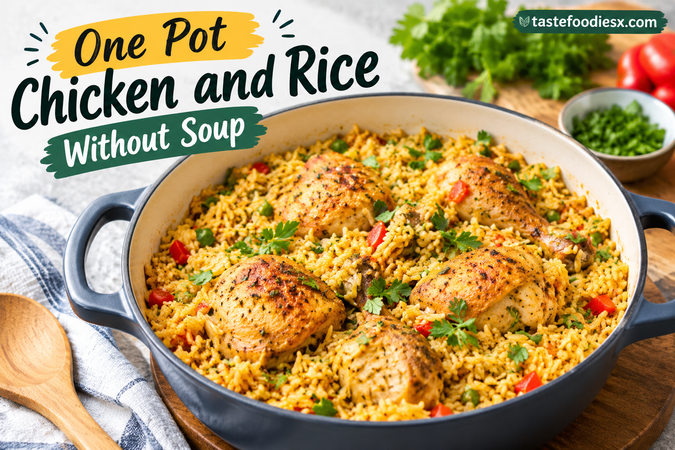
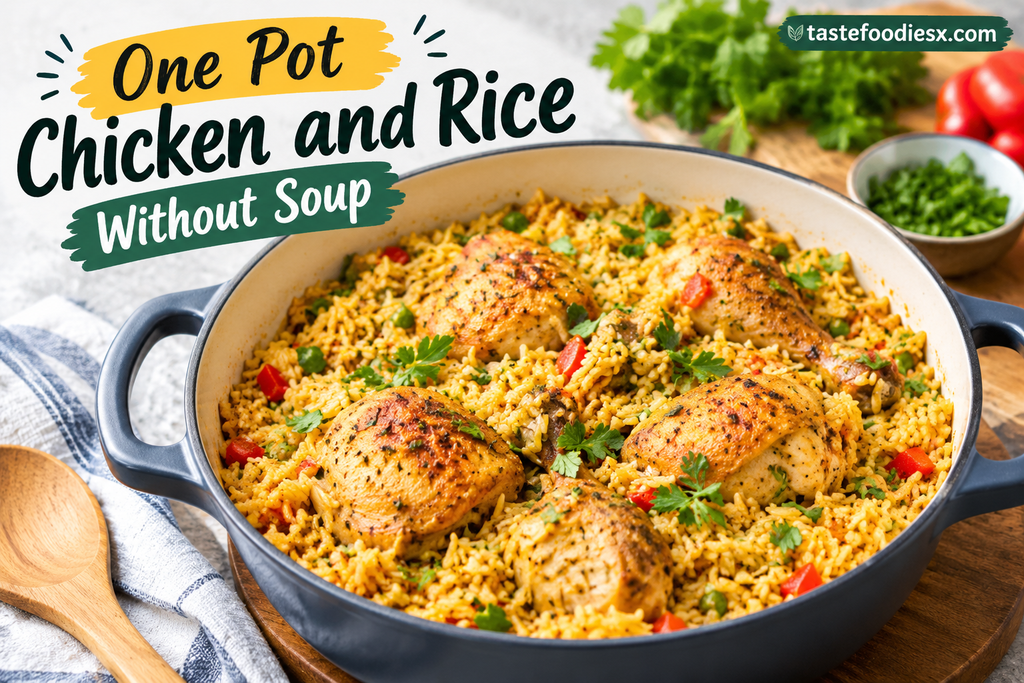
If you’re looking for a cozy homemade dinner that doesn’t require a lot of dishes, this one pot chicken and rice without soup recipe is exactly what you need. It’s simple, flavorful, filling, and made with everyday ingredients. Unlike many chicken and rice recipes that rely on canned cream soup, this version gets its flavor from aromatic vegetables, herbs, spices, chicken broth, and perfectly cooked rice.
The best part? Everything cooks together in one pot, allowing the rice to absorb the savory juices from the chicken. The result is tender chicken, fluffy rice, and a delicious meal that feels like comfort food without being complicated.
Whether you’re cooking for your family on a busy weeknight or simply want an easy meal with minimal cleanup, this recipe is worth adding to your regular dinner rotation.
Why Make One Pot Chicken and Rice Without Soup?
There are plenty of reasons to make chicken and rice without canned soup. While condensed soups can be convenient, you don’t need them to create a creamy-tasting, flavorful, and satisfying meal.
This recipe is:
- Easy to prepare
- Made in one pot
- Free from canned condensed soup
- Great for busy weeknights
- Budget-friendly
- Family-friendly
- Customizable with vegetables and spices
- Made with simple pantry ingredients
- Perfect for leftovers
Cooking everything in one pot also gives the rice a wonderful flavor. As the chicken cooks, its juices combine with the broth and seasonings, creating a naturally savory cooking liquid.
Ingredients for One Pot Chicken and Rice Without Soup
You don’t need an extensive ingredient list for this easy chicken and rice dinner. Here’s what you’ll need.
Chicken
Boneless, skinless chicken thighs are an excellent choice because they stay tender and juicy during cooking. You can also use boneless chicken breasts if you prefer leaner meat.
Bone-in chicken thighs can work as well, although they may require additional cooking time.
Rice
Long-grain white rice works particularly well because it cooks evenly and remains fluffy. Basmati rice is another excellent option, especially if you enjoy fragrant rice.
Avoid using instant or quick-cooking rice unless you adjust the cooking method because it can become mushy.
Onion
Diced onion creates a flavorful base for the dish. Cooking it until soft allows its natural sweetness to develop.
Garlic
Fresh garlic adds a savory aroma and depth of flavor. If you love garlic, feel free to add a little extra.
Chicken Broth
Chicken broth replaces the canned soup traditionally used in some chicken and rice recipes. It provides moisture while adding plenty of savory flavor.
Low-sodium chicken broth is a good choice because it gives you more control over the salt.
Seasonings
A simple combination of paprika, black pepper, salt, garlic powder, onion powder, and dried herbs works beautifully.
You can use dried thyme, parsley, oregano, or a combination of your favorites.
Oil or Butter
A little olive oil or butter helps brown the chicken and sauté the vegetables. Butter gives the dish a richer flavor, while olive oil keeps it slightly lighter.
How to Make One Pot Chicken and Rice Without Soup
The preparation is straightforward, but a few simple techniques make a big difference.
Step 1: Prepare the Chicken
Cut the chicken into bite-sized pieces if you’re using boneless chicken. Pat it dry with paper towels, then season it generously with salt, pepper, paprika, garlic powder, and your preferred herbs.
Seasoning the chicken before cooking helps build flavor throughout the dish.
Step 2: Brown the Chicken
Heat a large heavy-bottomed skillet or Dutch oven over medium-high heat. Add a little oil and place the seasoned chicken into the hot pan.
Cook for several minutes, turning occasionally, until the outside develops a golden-brown color.
The chicken doesn’t need to be completely cooked at this stage. It will finish cooking with the rice.
Remove the chicken from the pot and set it aside temporarily.
Step 3: Sauté the Onion and Garlic
Add the diced onion to the same pot. Cook for a few minutes until it begins to soften.
Add the minced garlic and cook for about 30 seconds. Be careful not to burn the garlic because it can become bitter.
The browned bits left on the bottom of the pot will add even more flavor.
Step 4: Add the Rice
Add the uncooked rice to the pot and stir it with the onions and garlic.
Let it cook for a minute or two. Lightly toasting the rice helps enhance its flavor and can also help the grains maintain a pleasant texture.
Step 5: Add Broth and Seasonings
Pour the chicken broth into the pot and scrape the bottom gently with a wooden spoon to release any browned bits.
Add your remaining seasonings and stir everything together.
Step 6: Return the Chicken
Place the browned chicken back into the pot, along with any juices that collected on the plate.
Bring the liquid to a gentle simmer.
Step 7: Cover and Cook
Reduce the heat to low and cover the pot with a tight-fitting lid.
Allow the chicken and rice to cook until the rice has absorbed most of the broth and the chicken is fully cooked.
Try not to repeatedly lift the lid while the rice is cooking. Steam is important for cooking the rice evenly.
Step 8: Rest Before Serving
Once the rice is tender, turn off the heat and let the pot rest, covered, for about five minutes.
Fluff the rice gently with a fork before serving.
This short resting period allows the remaining moisture to distribute throughout the rice.
Tips for Perfect One Pot Chicken and Rice
Making chicken and rice in one pot is easy, but these tips can help you get better results.
Rinse the Rice
If you’re using white rice, rinsing it under cool water until the water runs mostly clear can remove excess surface starch. This may help prevent overly sticky rice.
Drain the rice well before adding it to the pot.
Don’t Skip Browning the Chicken
You can technically cook the chicken directly with the rice, but browning it first creates much more flavor.
The caramelized surface and browned bits left in the pan contribute a rich, savory taste to the entire dish.
Use the Correct Amount of Liquid
Too much broth can make rice mushy, while too little can leave the rice undercooked.
The exact amount of liquid can vary depending on the rice variety, pot, cooking temperature, and whether you rinse the rice. Start with the cooking ratio recommended for your particular rice and adjust in future batches if necessary.
Keep the Lid Closed
Once the rice begins cooking, resist the temptation to keep checking it.
Every time you remove the lid, steam escapes. This can interfere with the cooking process and may result in unevenly cooked rice.
Let It Rest
Resting the finished dish for a few minutes is a small step that makes a noticeable difference. It allows excess moisture to settle and makes the rice easier to fluff.
What Kind of Chicken Works Best?
Several types of chicken can be used for this recipe.
Boneless chicken thighs: These are juicy, flavorful, and forgiving if slightly overcooked.
Chicken breast: A lean option that works well, although you should avoid overcooking it because breast meat can become dry.
Bone-in chicken thighs: These provide excellent flavor but may require longer cooking.
Leftover cooked chicken: You can also make a shortcut version using leftover roasted or rotisserie chicken. Add the cooked chicken later in the process so it doesn’t become dry.
If using leftover chicken, make sure it is reheated thoroughly before serving.
Can You Add Vegetables?
Absolutely. One of the best things about homemade chicken and rice is how easy it is to customize.
You can add:
- Carrots
- Peas
- Corn
- Bell peppers
- Green beans
- Mushrooms
- Spinach
- Broccoli
For vegetables that require longer cooking, such as carrots, add them earlier. Softer vegetables and frozen peas can be added closer to the end.
Adding vegetables turns this simple dinner into a more complete one-pot meal.
How to Add More Flavor Without Soup
You don’t need canned soup to make chicken and rice flavorful.
Try adding a combination of:
- Fresh garlic
- Onion
- Smoked paprika
- Dried thyme
- Oregano
- Black pepper
- Fresh parsley
- Lemon juice
- Chicken broth
- A small amount of butter
A squeeze of fresh lemon juice at the end can brighten the entire dish. Fresh parsley also adds color and freshness.
For a richer version, stir in a small amount of butter after cooking.
Can You Make This Recipe With Brown Rice?
Yes, but brown rice generally requires more cooking time and liquid than white rice.
If you substitute brown rice, follow the package cooking instructions and adjust the broth accordingly.
You may also need to adjust when you add the chicken. Since brown rice takes longer to cook, smaller pieces of chicken may become dry if cooked for the entire time.
For the easiest and most predictable results, long-grain white rice or basmati rice is recommended.
How to Prevent Mushy Rice
Mushy rice is one of the most common problems with one-pot chicken and rice recipes.
The biggest causes are usually too much liquid, overcooking, or using a rice variety that releases a lot of starch.
To help prevent mushy rice:
- Measure your rice and liquid carefully.
- Rinse the rice if appropriate for your rice variety.
- Avoid excessive stirring while it cooks.
- Keep the heat low once the liquid begins simmering.
- Keep the pot covered.
- Let the rice rest after cooking.
Also remember that different brands and varieties of rice behave differently. If your first batch is slightly too wet, reduce the liquid a little next time.
How to Store Leftover Chicken and Rice
If you have leftovers, allow them to cool appropriately and transfer them to an airtight container.
Store the leftovers in the refrigerator and reheat them thoroughly before eating.
For convenient meal preparation, divide the chicken and rice into individual containers. This makes it easy to grab a ready-to-reheat lunch or dinner.
When reheating, adding a small splash of chicken broth or water can help restore moisture.
Can You Freeze Chicken and Rice?
Chicken and rice can be frozen, although the texture of the rice may change slightly after thawing.
For best results, cool the food promptly, place it in freezer-safe containers, and portion it into meal-sized servings.
When you’re ready to eat, thaw it safely and reheat until steaming hot throughout.
If you plan to freeze this recipe regularly, slightly undercooking the rice may help it retain a better texture after reheating.
What to Serve With One Pot Chicken and Rice
Because this dish already contains protein and carbohydrates, you don’t need many side dishes.
A simple green salad is a great choice. Steamed broccoli, roasted vegetables, or green beans can also complement the meal.
For something fresh, serve it with sliced cucumber, tomatoes, or a simple lemony salad.
You can also serve warm bread on the side if you want an especially hearty dinner.
Easy Flavor Variations
Once you know the basic method, you can change the seasonings to create different versions.
Lemon Herb Chicken and Rice
Add lemon zest, lemon juice, thyme, and parsley for a bright, fresh flavor.
Spicy Chicken and Rice
Add chili powder, cayenne pepper, smoked paprika, or red pepper flakes for some heat.
Garlic Butter Chicken and Rice
Use extra garlic and finish the dish with a small amount of butter and fresh parsley.
Mexican-Inspired Chicken and Rice
Add cumin, chili powder, paprika, corn, and black beans. Serve with fresh cilantro and lime.
Mediterranean Chicken and Rice
Use oregano, garlic, lemon, parsley, and diced vegetables. You can also add olives for extra flavor.
Common Mistakes to Avoid
Even a simple one-pot meal can go wrong if a few details are overlooked.
Using too much liquid: This can result in soft or mushy rice.
Cooking at too high a temperature: The bottom may burn before the rice is cooked.
Skipping the seasoning: Rice absorbs a lot of flavor, so season the broth and chicken properly.
Cutting the resting time short: Give the finished dish a few minutes before fluffing.
Using a very shallow pan: A deeper heavy-bottomed skillet or Dutch oven distributes heat more evenly.
Frequently Asked Questions
Can I make chicken and rice without cream of chicken soup?
Yes. Chicken broth, herbs, garlic, onion, and seasonings can provide plenty of flavor without canned cream soup.
What is the best rice for one pot chicken and rice?
Long-grain white rice and basmati rice are both good choices. Follow the liquid and cooking instructions appropriate for your specific rice.
Can I use chicken breast instead of thighs?
Yes. Chicken breast works well, but be careful not to overcook it because it can dry out more quickly than chicken thighs.
Why is my rice still hard?
If the rice is hard, it may need additional liquid or cooking time. Add a small amount of hot broth or water, cover the pot, and continue cooking gently until the rice is tender.
Why is my chicken and rice watery?
It may have too much liquid or may not have cooked long enough. Continue cooking uncovered for a short time if the chicken is already fully cooked, allowing some excess moisture to evaporate.
Can I use leftover rotisserie chicken?
Yes. Rotisserie chicken is an excellent shortcut. Prepare the rice separately in the same pot and stir in shredded rotisserie chicken toward the end so it stays moist.
Final Thoughts
This one pot chicken and rice without soup recipe proves that you don’t need canned condensed soup to create a delicious, comforting dinner. With tender chicken, fluffy rice, aromatic onions and garlic, flavorful broth, and simple seasonings, you can make a satisfying homemade meal using ingredients you probably already have.
The one-pot cooking method keeps preparation simple and cleanup easy, making it especially useful for busy weeknights. You can also customize the recipe with vegetables, different herbs, spices, or leftover chicken depending on what you have available.
Once you master the basic technique, you’ll have a flexible meal that can easily become a family favorite. Whether you prefer juicy chicken thighs, lean chicken breast, fragrant basmati rice, or plenty of vegetables, this soup-free version gives you plenty of room to make the dish your own.