
Some dinners earn a permanent spot in the weeknight rotation on the very first try, and this is one of them. Creamy ranch chicken thighs with bacon is the kind of meal that looks like it took real effort and tastes like something from a restaurant, but it comes together in one pan in about forty minutes, with ingredients most of us already have sitting in the fridge. Juicy chicken thighs with properly crisped skin, salty bacon, and a ranch cream sauce that is rich without being heavy — it is comfort food, but the grown-up kind, the kind you can serve to guests without a second thought.
I started making this on nights when I wanted something satisfying but did not want to wash three pans or stand over the stove for an hour. Chicken thighs were the obvious choice. They forgive a lot more than chicken breast does. Leave a breast in the pan a minute too long and it turns dry and stringy; a thigh stays juicy, and the skin crisps up into something genuinely worth eating. Add bacon, and you get that smoky, salty crunch that makes the whole dish taste like more than the sum of its parts. The ranch sauce ties it together — herby, garlicky, creamy — and it soaks into everything on the plate.
What I like most about this recipe is how flexible it is. It works with bone-in or boneless thighs, with homemade ranch seasoning or a packet from the store, and with whatever you have on hand to serve alongside it. It is a Monday-night dinner and a Friday-night treat at the same time, and the leftovers, if you are lucky enough to have any, reheat beautifully the next day.
Why You’ll Love This Recipe
First, it is a genuine one-pan meal. The chicken sears in the same skillet the sauce is built in, which means all those browned bits stuck to the bottom of the pan — the fond, if we are being fancy — end up in the sauce instead of down the drain. That is where half the flavour lives, and it is the reason one-pan cooking so often beats cooking everything separately.
Second, the timing is honest. Forty minutes, start to finish, including the time it takes to chop an onion and measure out the cream. There is no marinating overnight, no brining, no special equipment. A large skillet, a cutting board, and a stove are all you need. If you have ever read a recipe that promised thirty minutes and actually took an hour and a half, you will appreciate that this one keeps its word.
Third, it feeds a crowd without scaling awkwardly. Doubling it is as simple as using a bigger pan or searing the thighs in two batches. It works just as well for two people as it does for six, and it is one of those rare dishes that picky eaters and adventurous eaters both seem to like. The ranch flavour is familiar enough for kids, and the bacon and cream make it interesting enough for everyone else.
And finally, it is hard to mess up. Chicken thighs are forgiving, the sauce is simple, and the whole thing is built on technique you can learn in one go: sear, remove, build the sauce, return the chicken, simmer. Once you have made it a couple of times you will not need the recipe at all.
Ingredients You’ll Need
For the chicken, you will want six bone-in, skin-on chicken thighs, about two pounds in total. Boneless thighs work too, and they cook a little faster, but bone-in thighs with the skin on give you the best flavour and the crispiest skin, so that is what I reach for most of the time. A teaspoon of salt, half a teaspoon of black pepper, a teaspoon of garlic powder, and a teaspoon of smoked paprika for seasoning the chicken. The paprika is not just for colour — it adds a gentle smokiness that plays nicely with the bacon.
For the bacon, six slices, chopped into small pieces. Thick-cut bacon holds up better here than thin slices, which can disappear into the sauce. You want distinct, chewy-crisp bits of bacon in every bite, not bacon dust.
For the sauce, you will need one small onion, finely diced; three cloves of garlic, minced; a cup of chicken broth; a cup of heavy cream; two tablespoons of ranch seasoning — either a store-bought packet or a homemade blend of dried dill, parsley, garlic powder, onion powder, and a pinch of salt; a tablespoon of Dijon mustard, which adds a quiet sharpness that keeps the sauce from tasting flat; and half a cup of freshly grated Parmesan, which thickens the sauce and gives it a salty, savoury depth. Finish with a handful of chopped fresh chives or parsley, and a squeeze of lemon if you like a little brightness at the end.
A note on the ranch seasoning: if you use a packet, check whether it already contains a lot of salt before you season the chicken. Packets vary, and it is easy to over-salt this dish. Taste the sauce before adding extra salt at the end. If you prefer to make your own blend, a mix of one tablespoon dried parsley, two teaspoons dried dill, one teaspoon garlic powder, one teaspoon onion powder, half a teaspoon salt, and a quarter teaspoon black pepper does the job well and lets you control the salt yourself. Ranch dressing has a surprisingly fun backstory — it was invented on a ranch in California in the 1950s and went on to become one of the most popular dressings in America, which you can read more about on Wikipedia’s ranch dressing page if you are curious.
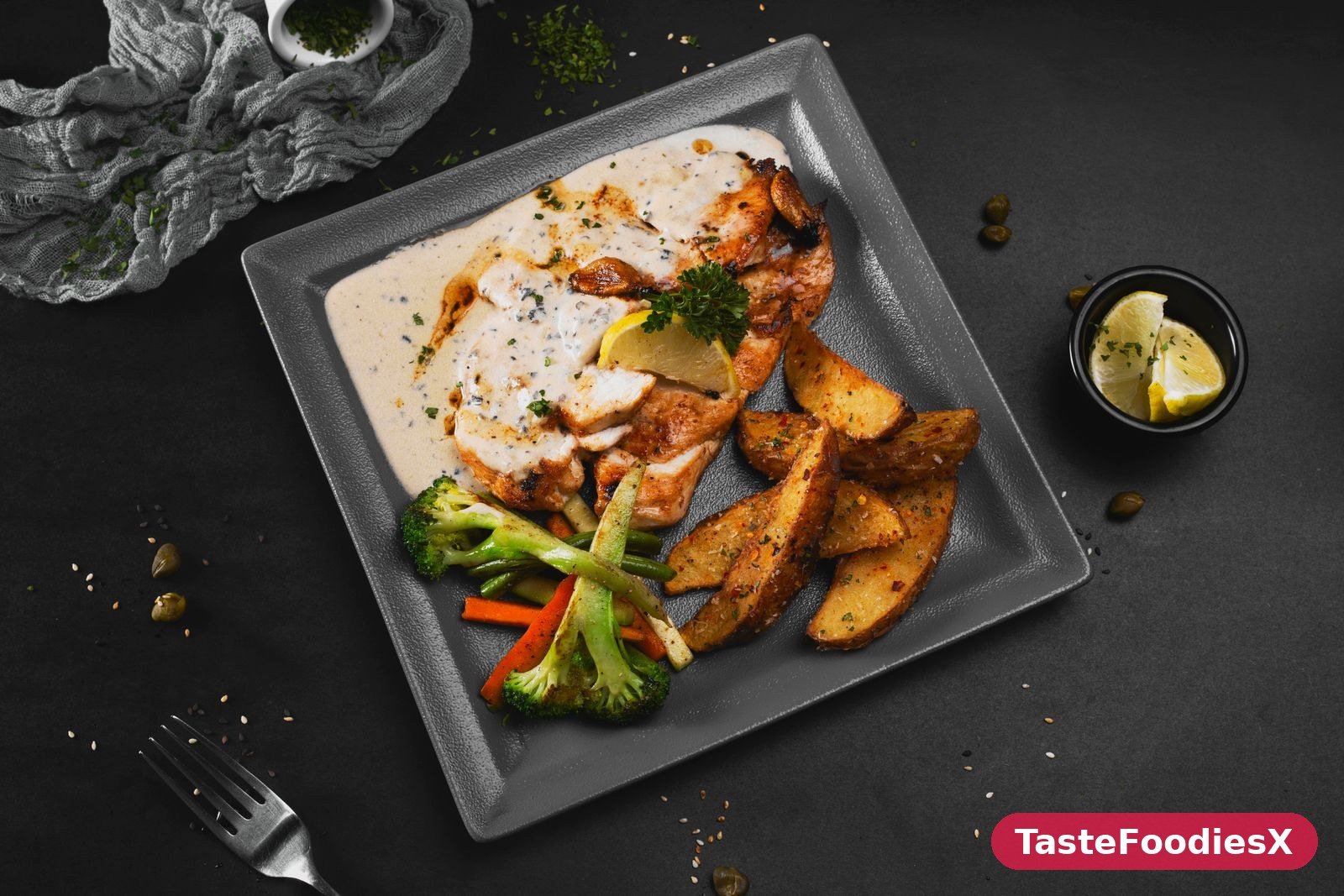
How to Make Creamy Ranch Chicken Thighs with Bacon
Start by patting the chicken thighs completely dry with paper towels. This is the single most important step for crispy skin, and it is the one people skip most often. Wet skin steams instead of searing, and steamed skin is soft and rubbery. Take the extra thirty seconds. Season both sides generously with the salt, pepper, garlic powder, and smoked paprika.
Heat a large, deep skillet over medium-high heat. You do not need oil — the bacon and the chicken skin will provide plenty of fat. Add the chopped bacon and cook it until it is crisp at the edges but still a little chewy in the middle, about five minutes. Scoop it out with a slotted spoon and set it aside on a plate, leaving the rendered bacon fat in the pan. That fat is liquid gold for this recipe, and it is going to flavour everything that follows.
Place the chicken thighs skin-side down in the hot bacon fat. Do not crowd the pan — if your skillet is not big enough for all six thighs with a little space between them, sear them in two batches. Leave them alone for five to six minutes. Do not poke them, do not lift the skin to peek, do not slide them around. The skin needs uninterrupted contact with the pan to crisp properly. When the skin is deep golden brown and releases easily from the pan, flip the thighs and sear the other side for three to four minutes. Transfer them to a plate. They will not be cooked through yet, and that is fine — they will finish in the sauce.
Turn the heat down to medium. There should be a couple of tablespoons of fat left in the pan; if there is much more than that, spoon some out. Add the diced onion and cook it for about three minutes, until it softens and turns translucent, scraping up the browned bits from the bottom of the pan as you stir. Add the garlic and cook for another thirty seconds, just until it smells fragrant. Garlic burns fast, so do not walk away at this point.
Pour in the chicken broth and use a wooden spoon to scrape up anything still stuck to the pan. Let it bubble for a minute, then stir in the heavy cream, the ranch seasoning, and the Dijon mustard. Bring it to a gentle simmer — not a rolling boil, which can make cream sauces split — and let it cook for two to three minutes until it starts to thicken slightly. Stir in the Parmesan a little at a time, letting each handful melt before adding the next, so the sauce stays smooth instead of clumping.
Nestle the chicken thighs back into the sauce, skin-side up, along with any juices that collected on the plate. Spoon a little sauce over the thighs, but keep the skin above the sauce line if you can — this keeps the skin crisp. Scatter most of the bacon over the top, saving a little for garnish. Reduce the heat to low, cover the pan, and let everything simmer gently for twelve to fifteen minutes, until the chicken is cooked through. The safest way to check is with an instant-read thermometer: chicken is done when the thickest part of the thigh reaches 165°F (74°C). The US FoodSafety.gov safe minimum internal temperature chart lists 165°F as the safe temperature for all poultry, and it is worth checking rather than guessing, especially with bone-in thighs, which can look done on the outside while the meat near the bone is still undercooked.
Uncover the pan and let the sauce bubble for another two to three minutes if you would like it a little thicker. Taste it and adjust the salt and pepper. Sprinkle over the reserved bacon, the chopped chives or parsley, and a squeeze of lemon if you are using it. Serve it straight from the pan, family style, with the sauce spooned generously over everything.
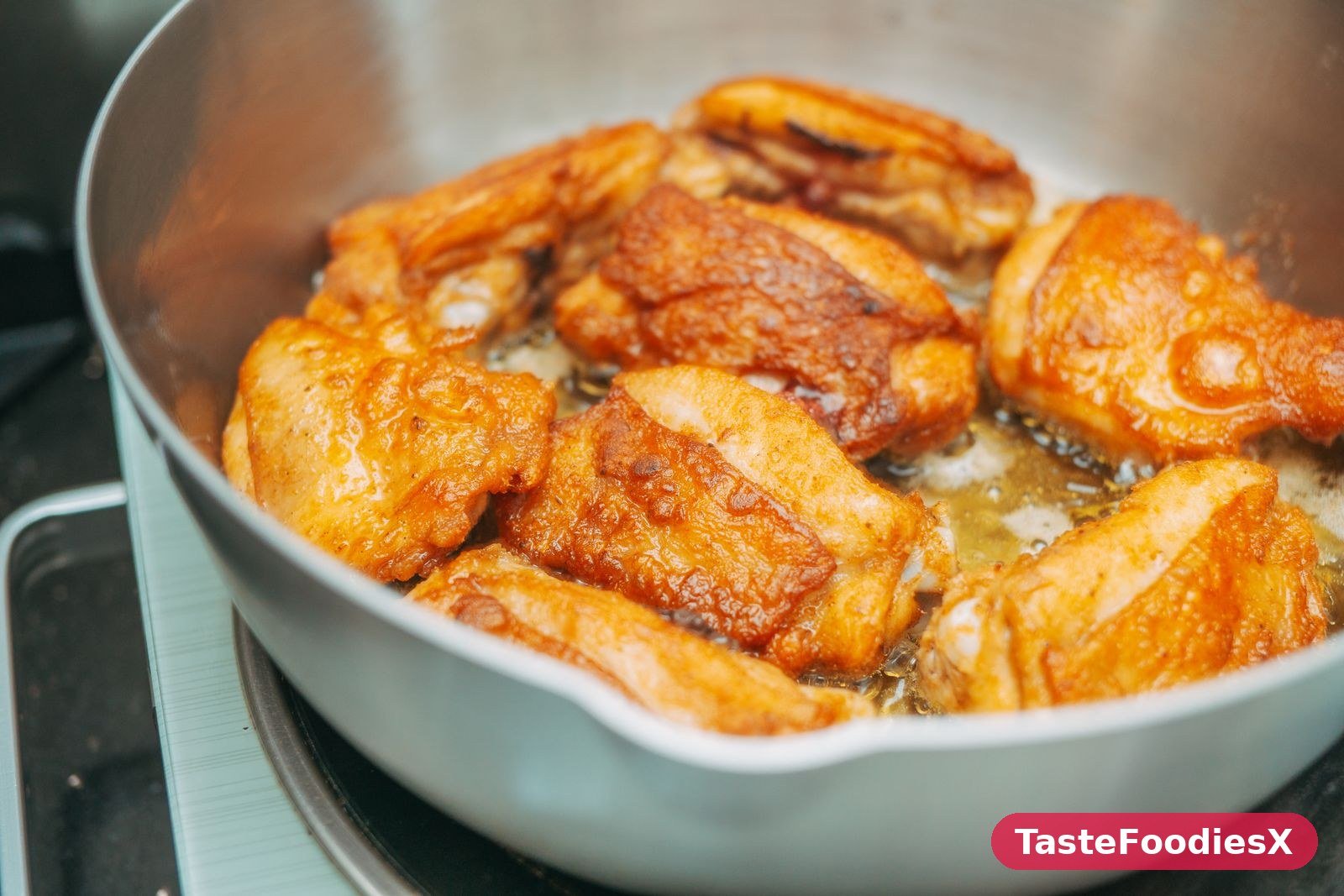
The Ranch Sauce, Done Right
The sauce is what makes this dish, so it is worth understanding what is going on in the pan. Heavy cream gives the sauce its body and its silky texture, and it is far more forgiving than milk, which can curdle when it hits a hot pan with acidic ingredients. If you want a lighter version, half-and-half works, but the sauce will be thinner and you will need to simmer it a little longer to get it to coat a spoon.
The Parmesan does two jobs at once. It thickens the sauce, and it adds a salty, umami depth that balances the richness of the cream. Use freshly grated Parmesan if you can. The pre-grated kind in a tub is coated with anti-caking agents that keep it from melting smoothly, and it can make the sauce slightly grainy. A block of Parmesan and a box grater take about a minute and make a real difference.
One thing to watch is the heat. Once the cream goes in, keep the sauce at a gentle simmer. A hard boil can cause the cream to separate and the Parmesan to turn oily. If the sauce does split on you, take the pan off the heat and whisk in a splash of cold cream — that usually brings it back together. And if the sauce ends up thicker than you like, a splash of chicken broth thins it out without watering down the flavour.
The Dijon mustard might seem like an odd addition, but it earns its place. A tablespoon is not enough to make the sauce taste like mustard; it just adds a subtle sharpness that cuts through the richness and makes the ranch flavour taste brighter. Leave it out if you really hate mustard, but try it once first — most people cannot even identify it in the finished dish, they just notice the sauce tastes more interesting.
What to Serve With It
This is a saucy dish, so whatever you serve alongside it should be good at soaking up sauce. Mashed potatoes are the classic choice, and honestly the right one — a spoonful of creamy ranch sauce over buttery mashed potatoes is hard to beat. Rice works well too, especially a simple buttered rice or a herby pilaf. Crusty bread is the low-effort option and nobody at the table will complain about it.
For something green, roasted broccoli or green beans with a little garlic are both excellent, and they add a bit of freshness that balances the richness of the sauce. A simple side salad with a sharp vinaigrette does the same job. In summer, I like it with grilled corn or a tomato and cucumber salad. In winter, it is roasted carrots or a pan of garlicky sauteed spinach.
If you are cooking for a crowd and want the meal to feel a little more complete, add a second chicken dish to the table. Our One-Pan Creamy Garlic Chicken and Mushrooms uses a similar technique with a completely different flavour profile, so the two dishes sit nicely together without feeling repetitive. Or keep things simpler with our Easy Honey Mustard Chicken, which brings a sweet, tangy contrast to the table.
Storage and Reheating
Leftovers keep well in the fridge for three to four days in an airtight container. The sauce will thicken as it cools — that is normal, and it loosens up again when you reheat it. Warm it gently in a covered skillet over low heat, adding a splash of chicken broth or cream to loosen the sauce. Avoid the microwave if you can, because it heats unevenly and can make the chicken skin soggy and the sauce split. If the microwave is your only option, use half power and short bursts, stirring the sauce between each one.
This dish also freezes reasonably well, though the sauce texture changes a little after thawing. If you plan to freeze it, let it cool completely, then store the chicken and sauce together in a freezer-safe container for up to two months. Thaw it overnight in the fridge and reheat it gently on the stove. The skin will not be crisp after freezing, so think of the frozen version as a cosy, saucy chicken dish rather than a crispy-skinned one — still delicious, just different.
The cooked bacon holds up fine in the fridge, but if you want the crunch back, you can crisp a fresh slice or two and scatter it over the top when you reheat. It is a small touch that makes leftovers feel like a fresh meal.
Tips That Actually Matter
Pat the chicken dry. I said it already, but it is worth saying twice, because it is the difference between golden, crackly skin and pale, floppy skin. Paper towels, both sides, no shortcuts.
Do not move the chicken while it sears. The skin needs time to form a crust and release from the pan on its own. If you try to flip it too early and it sticks, it is not ready — give it another minute and it will let go.
Use a pan that is big enough. Crowded chicken steams instead of searing, and crowded chicken in sauce cooks unevenly. A twelve-inch skillet fits six thighs comfortably. If yours is smaller, sear in batches and build the sauce in the same pan afterwards.
Keep the skin above the sauce. When you return the thighs to the pan, spoon sauce around them rather than over them. The skin stays crisp, and the meat still cooks through in the steam and the simmering sauce below.
Taste before you salt. Between the bacon, the Parmesan, and the ranch seasoning, there is already a lot of salt in this dish. Taste the sauce at the end and add salt only if it genuinely needs it. You can always add more; you cannot take it out.
Let it rest for five minutes before serving. The chicken finishes cooking gently in the residual heat, the sauce settles and thickens slightly, and the flavours come together. It also gives you time to set the table, which is never a bad thing.
If you love this style of cooking — a quick sear, a creamy pan sauce, dinner on the table in under an hour — you will probably enjoy our Creamy Tuscan Chicken Skillet as well. It swaps the ranch and bacon for sun-dried tomatoes, spinach, and garlic, and it uses exactly the same one-pan method. And if chicken thighs are your thing in general, our Air Fryer Lemon Pepper Chicken Thighs are a lighter, crispier weeknight option for nights when you want something simpler.
Frequently Asked Questions
Can I use boneless chicken thighs instead of bone-in?
Yes, boneless thighs work well and they cook faster — usually eight to ten minutes in the sauce instead of twelve to fifteen. The skin will not be quite as crisp without the bone to help it hold its shape, and boneless thighs shrink a little more as they cook, so use seven or eight instead of six if you want the same amount of meat. Check the internal temperature the same way, aiming for 165°F in the thickest part.
Can I use chicken breast for this recipe?
You can, but thighs are the better choice here. Breasts dry out more easily in a simmering sauce, and they do not have skin to crisp. If you do use breasts, pound them to an even thickness first, sear them for three to four minutes per side, and reduce the simmering time to about eight minutes so they do not overcook. Slice them before serving so the sauce gets into every piece.
Can I make this ahead of time?
Yes, and it is actually a good make-ahead dish. Cook it fully, let it cool, and store it in the fridge for up to two days. Reheat it gently in a covered skillet over low heat with a splash of broth or cream to loosen the sauce. Hold back the garnish of fresh herbs and extra bacon until you serve it, so it still looks and tastes fresh. I would not make it more than two days ahead, because the skin loses its crispness and the sauce thickens more each day.
What can I use instead of heavy cream?
Half-and-half is the closest substitute and works fine, though the sauce will be thinner — simmer it a couple of minutes longer to compensate. Full-fat canned coconut milk also works if you need a dairy-free option, but it changes the flavour, adding a faint sweetness that suits the ranch seasoning surprisingly well. I would avoid regular milk, which is more likely to curdle when simmered with the mustard and Parmesan, and I would avoid low-fat cream, which tends to split.
How do I keep the sauce from splitting?
Two things matter most: heat and order. Keep the sauce at a gentle simmer once the cream goes in — never a rolling boil. And add the Parmesan gradually, a small handful at a time, stirring until each addition melts before adding the next. If the sauce does split, pull the pan off the heat immediately and whisk in a splash of cold cream. In most cases it comes back together within a few seconds. Starting with room-temperature cream instead of cold cream from the fridge also helps, because the temperature change in the pan is less dramatic.
That is really all there is to it. Crispy chicken, salty bacon, and a ranch cream sauce that makes the whole pan taste like something special — and most of the work is just waiting for the skin to crisp and the sauce to simmer. Put it on your list for this week. I think it will stay there.