
There are dinners that ask a lot of you and dinners that ask almost nothing, and on a Tuesday night the difference matters more than any recipe ever will. Beef stroganoff used to belong firmly in the first group in my kitchen. It meant two pans, a sauce that could split if you looked at it wrong, and beef that went from tender to shoe leather somewhere between the second and third minute. Then one evening, short on time and shorter on patience, I made the whole thing in a single wide skillet and discovered that the one-pan version was not a compromise at all. It was better. The mushrooms browned in the same fat the beef had left behind, the sauce picked up every browned bit from the bottom of the pan, and there was exactly one pan to wash at the end. That is the version I have made ever since.
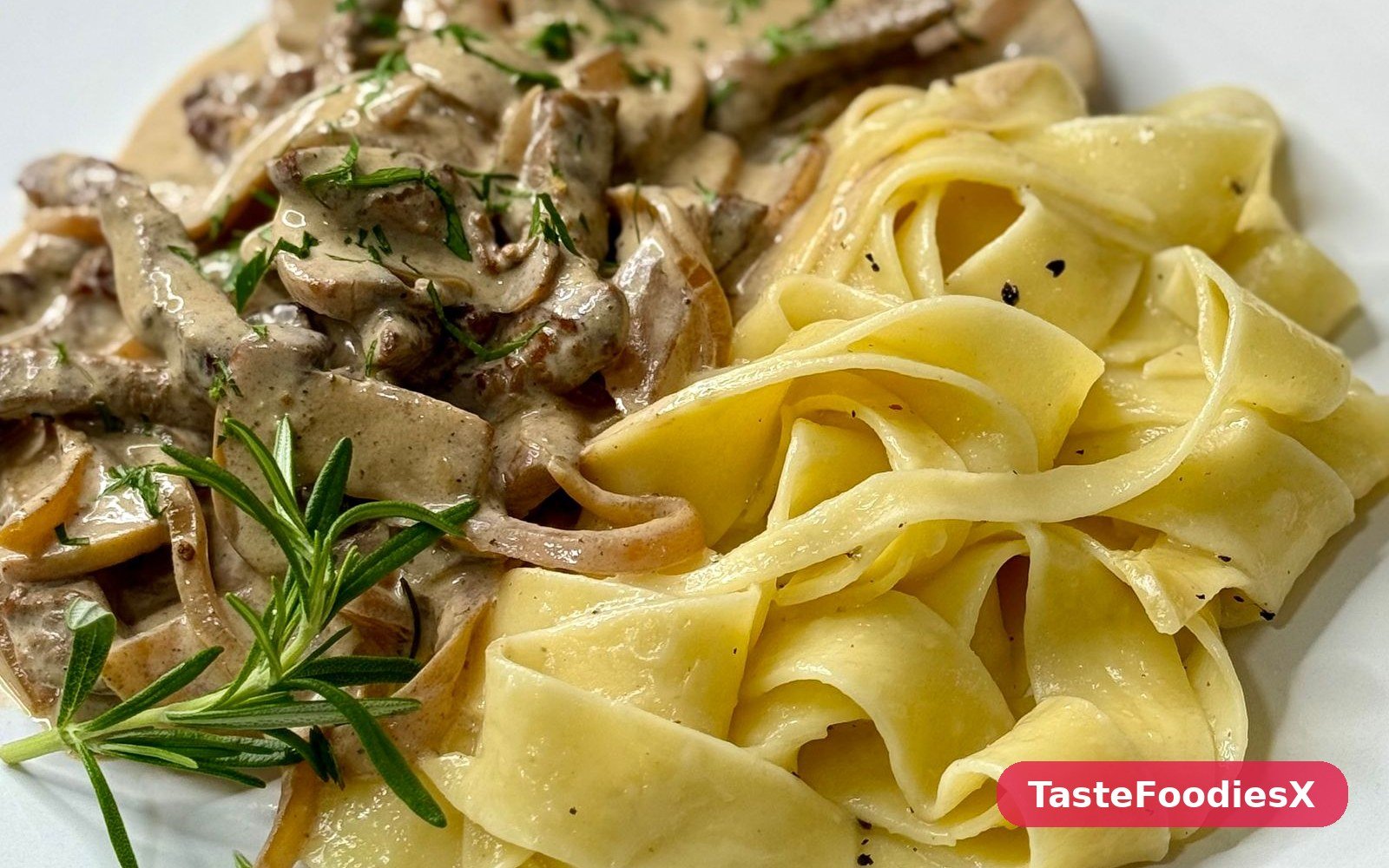
What you get here is the classic comfort of stroganoff without the ceremony. Strips of beef seared hard and fast so they stay tender, mushrooms cooked until they are properly golden instead of pale and steamy, onions softened sweet, and a sauce built on beef stock, a spoonful of Dijon, and sour cream stirred in at the very end so it stays silky. It comes together in about thirty-five minutes, most of it hands-off simmering, and it tastes like something that took twice as long. Spoon it over egg noodles and you have the dinner most people picture when they hear the word stroganoff. Spoon it over mashed potatoes or rice and nobody at the table will complain.
The reason this recipe earns a permanent place in a weeknight rotation is not just speed. It is that every step has a reason you can taste. The beef is seared in batches because a crowded pan steams instead of browning, and browning is where the flavour lives. The mushrooms get the same treatment, because a mushroom that has actually browned tastes almost meaty, while a mushroom that has only steamed tastes like damp sponge. The flour goes in before the liquid so the sauce thickens smoothly instead of clumping. And the sour cream goes in last, off the heat, because sour cream that boils will split and turn grainy, and there is no fixing that once it happens. None of this is difficult. It is just the small stuff that separates a good stroganoff from a forgettable one.
Why This Stroganoff Works on a Weeknight
Most comfort food asks you to choose between flavour and time. Stroganoff refuses that trade, which is why it has survived since nineteenth-century Russia while trendier dinners have come and gone. The whole dish is built from things you probably already have: beef, mushrooms, an onion, garlic, stock, and sour cream. Nothing needs a special trip. Nothing needs marinating overnight. You can start cooking at six and be sitting down before half past, and the pan you cooked in is the only one that needs washing.
The one-pan method does more than save washing up. It makes the sauce better. Every time you sear beef or brown mushrooms, you leave behind a layer of caramelised bits stuck to the pan, and when you pour in the stock those bits dissolve straight into the sauce. That is free flavour, and it is the difference between a sauce that tastes like cream with stuff in it and a sauce that tastes like it has been simmering for hours. If you have ever made our One-Pan Creamy Garlic Chicken and Mushrooms, you will recognise the same trick at work: brown things properly, then let the liquid do the cleaning.
It is also a forgiving recipe, which matters on nights when you are cooking with one eye on the clock and the other on a child doing homework at the counter. If the beef is a little thicker than planned, it still works. If you only have button mushrooms instead of cremini, it still works. If you run out of egg noodles, rice or mashed potatoes step in without a fuss. The sauce is the safety net. As long as you keep the heat gentle once the sour cream goes in, the dish will look after itself.
The Beef: What Cut to Buy (and What to Skip)
The beef is the one place where your choice genuinely matters, so it is worth thirty seconds at the butcher counter. Sirloin is the sweet spot for this recipe: tender enough to cook in two minutes a side, flavourful enough to stand up to the sauce, and usually priced far below tenderloin. Cut it across the grain into strips about a centimetre thick and five centimetres long. Cutting across the grain shortens the muscle fibres, which is a small detail with a big payoff — it is the difference between beef that yields when you bite it and beef that fights back.
Ribeye also works beautifully if you trim the larger pieces of fat first, and it brings a richness that sirloin does not quite match. Tenderloin works too, though it is an expensive way to make a weeknight dinner and it can dry out if you sear it a second too long. What I would skip is stewing steak or chuck. Those cuts need long, slow cooking to become tender, and in a fast stroganoff they will stay tough no matter how good the sauce is. Save them for a stew, where they belong.
Whatever cut you buy, take the beef out of the fridge twenty minutes before cooking and pat it very dry with kitchen paper. Wet beef does not brown; it steams, and steamed beef is grey and sad. Season it generously with salt and pepper just before it hits the pan, not an hour earlier. Salt draws out moisture over time, and moisture is the enemy of a good sear. For safe handling and cooking temperatures, the USDA’s guide to beef from farm to table is a useful reference if you ever want to double-check the basics.
One more thing worth saying: do not crowd the pan. Sear the beef in two batches, even if it feels like a waste of time. A single layer of strips with space between them will brown in about ninety seconds a side. A pan packed edge to edge will fill with liquid, the temperature will drop, and you will spend five minutes watching grey beef simmer in its own juices. The batch method takes three extra minutes and saves the entire dish.
Ingredients You’ll Need
For four generous servings, you will need 600 g sirloin steak, cut into strips; 300 g mushrooms, sliced; one medium onion, finely diced; three cloves of garlic, minced; two tablespoons of butter; one tablespoon of olive oil; two tablespoons of plain flour; 250 ml beef stock; one tablespoon of Dijon mustard; one tablespoon of Worcestershire sauce; 150 g sour cream, at room temperature; a small handful of fresh parsley, chopped; and salt and black pepper. To serve, 300 g of wide egg noodles, cooked according to the packet, or mashed potatoes or rice if you prefer.
A few notes on the ingredients, because small choices here show up in the final plate. Cremini mushrooms are my first choice — they are simply brown button mushrooms, and they bring a deeper, earthier flavour than the white ones — but ordinary button mushrooms are perfectly fine. Use a proper beef stock rather than a crumbly stock cube dissolved in water if you can; the sauce is mostly stock, so its quality is the sauce’s quality. And let the sour cream come to room temperature before you use it. Cold sour cream hitting a hot pan is far more likely to split, and a split sauce is the one mistake in this recipe that you cannot undo.
The Dijon mustard might look like an optional extra, but it is doing real work. A single tablespoon will not make the sauce taste of mustard. What it does is sharpen the richness of the cream and give the sauce a little backbone, the same way a squeeze of lemon lifts a butter sauce. Worcestershire plays a similar role in the background, adding a savoury depth that makes people ask what your secret ingredient is. The answer is that there is no secret. There are just two condiments doing quiet work.
How to Make One-Pan Beef and Mushroom Stroganoff
Start by heating the olive oil in a large, wide skillet over high heat until it shimmers. You want the pan genuinely hot before the beef goes in — hold your hand a few inches above it and you should feel real heat. Add half the beef in a single layer, leave it completely alone for ninety seconds, then turn the strips and cook for another minute. They should be browned on the outside and still pink in the middle. Lift them out onto a plate and repeat with the second batch. Do not be tempted to cook the beef all the way through at this stage. It will finish in the sauce later, and beef that is fully cooked twice is beef that is overcooked.
Turn the heat down to medium-high and add the butter to the same pan. Once it foams, tip in the sliced mushrooms in a single layer and leave them alone for three or four minutes. This is the hardest part of the recipe, because everything in you will want to stir. Do not. Mushrooms release water as they cook, and if you stir them constantly they will sit in that water and steam. Left alone, the water evaporates, the mushrooms shrink, and then they start to brown, turning golden at the edges and developing a flavour that is almost meaty. When the first side is golden, stir once and let the other side catch up.
Now add the diced onion and cook for three minutes until it softens and turns translucent, then stir in the garlic and cook for just thirty seconds more. Garlic burns quickly, and burnt garlic turns bitter, so keep it brief. Sprinkle the flour over the mushrooms and onions and stir for a full minute. The flour will coat everything and look a little pasty. That is fine. Cooking it for a minute takes away the raw flour taste, and it is what will thicken your sauce into something that coats a spoon instead of running off it.
Pour in the beef stock a little at a time, scraping the bottom of the pan with a wooden spoon as you go. You will see the browned bits lift off and disappear into the liquid — that is the flavour we talked about, going exactly where it belongs. Stir in the Dijon mustard and the Worcestershire sauce, then bring the sauce to a gentle simmer. Let it bubble quietly for three or four minutes until it thickens slightly. It should coat the back of a spoon but still pour easily. If it gets too thick, a splash more stock fixes it.
Return the beef and any juices from the plate to the pan, and let everything simmer together for two minutes. The beef finishes cooking in the sauce, and the sauce picks up the last of the beef’s flavour. Then take the pan off the heat entirely. This is the important part. Wait thirty seconds, then stir in the sour cream, a spoonful at a time, until the sauce turns pale and silky. Taste it and adjust the salt and pepper. Stir in most of the parsley, spoon the stroganoff over hot egg noodles, and scatter the rest of the parsley on top.
The Sauce: Getting It Silky, Not Split
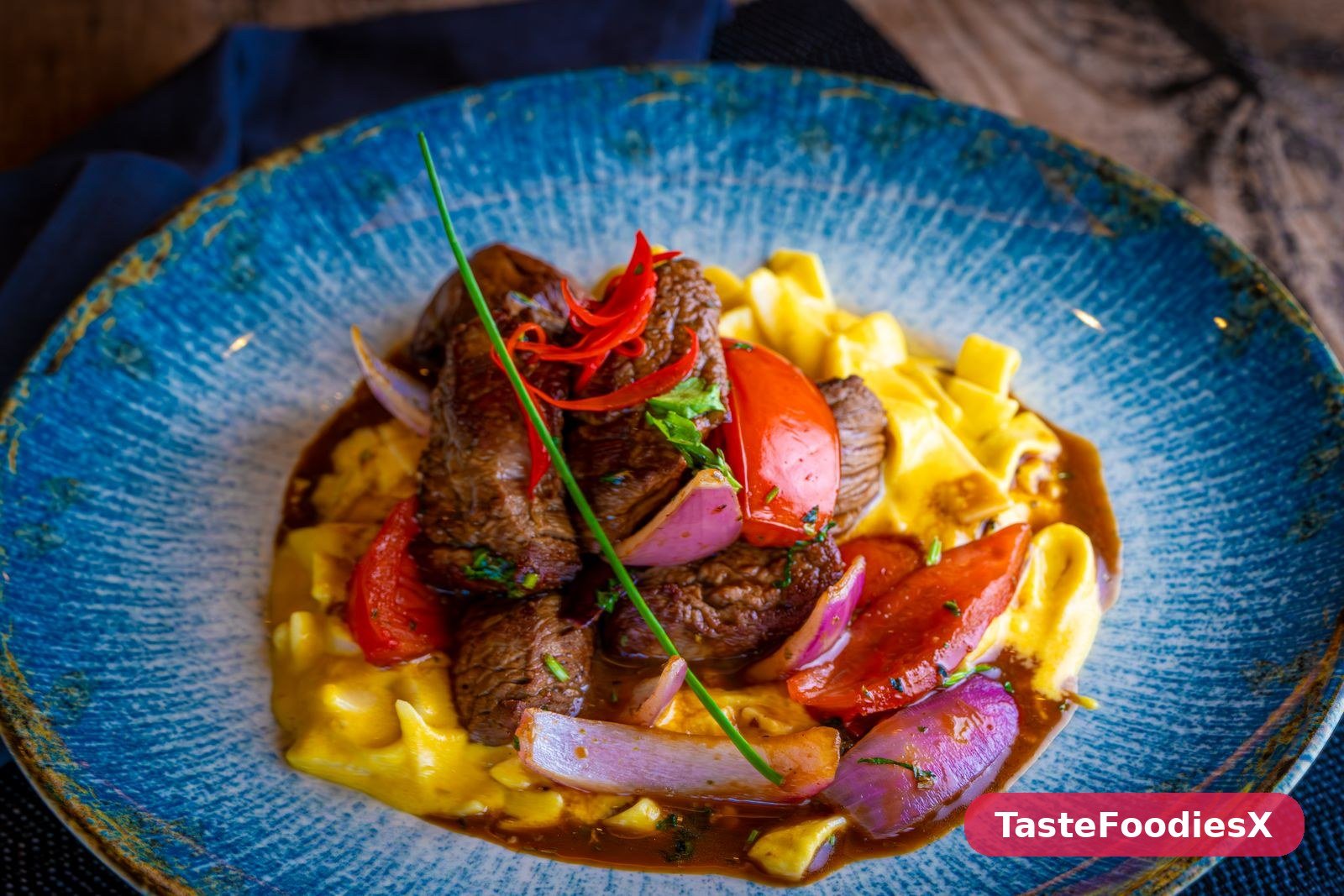
If there is one thing that makes people nervous about stroganoff, it is the sauce. Sour cream has a reputation for splitting, and the reputation is earned — but only when it is boiled. The rule is simple and non-negotiable: the sour cream goes in off the heat, always. Take the pan off the burner, count to thirty, and then stir it in. The residual heat of the sauce is more than enough to warm the sour cream through, and because the sauce is no longer boiling, the cream stays smooth.
Room temperature sour cream helps even more, so set the tub on the counter when you start slicing the beef. If you have ever had a sauce split on you, you will also know the other culprit: low-fat sour cream. Full-fat sour cream is far more stable under heat than the light version, and in a dish like this the difference in richness is the whole point. This is not the recipe for cutting corners on fat. Save that instinct for a salad.
For a sauce with even more depth, a splash of dry white wine or a spoonful of brandy stirred in with the stock is a classic move, and it adds a subtle warmth that suits the mushrooms. It is entirely optional, and the dish is excellent without it. If you do add wine, let it simmer for a minute before the stock goes in so the alcohol cooks off and only the flavour remains. Our Creamy Tuscan Chicken Skillet uses a similar trick with its sauce, and the principle is the same: build flavour in layers, and let each layer have its moment in the pan.
Thickness is a matter of taste. Some people like a stroganoff sauce that clings thickly to the noodles; others prefer it a little looser, almost like a gravy. You control it with the simmer time and the stock. Simmer a minute longer for thicker, add a splash of stock for thinner. Just remember the sauce will thicken slightly as it sits, so aim for a touch looser than you think you want when it comes off the heat.
What to Serve With It
Egg noodles are the traditional partner, and for good reason. The wide, flat noodles catch the sauce in a way that rice does not, and they cook in under ten minutes, which keeps the whole dinner inside that thirty-five minute window. Toss the cooked noodles with a knob of butter and a pinch of salt before you plate up, so they do not stick together in a sad clump while the stroganoff finishes.
That said, mashed potatoes are a serious rival. A spoonful of stroganoff over a mound of buttery mash, with the sauce pooling around the edges, is one of the great comfort dinners, and it is arguably even better the next day. Rice works too, especially a plain long-grain rice that soaks up the sauce without competing with it. If you are keeping things light, a slice of crusty bread for mopping up the sauce and a simple green salad on the side is enough. The stroganoff is rich, so something fresh and sharp next to it — a salad with a lemony dressing, or even just some pickled cucumber — keeps the plate balanced.
For a full spread, think about what else is already on the site. A pan of One-Pan Lemon Herb Chicken and Potatoes is a different kind of one-pan dinner for another night, and the two recipes share the same philosophy: one pan, honest ingredients, no fuss. And if you have leftover sour cream after making this, our One-Pan Garlic Butter Chicken and Rice is a good place to use up the rest of the tub before the week is out.
Storing and Reheating Leftovers
Stroganoff keeps well, and in my opinion it tastes even better the next day, once the sauce has had a night to settle into the beef. Store the stroganoff and the noodles separately — noodles left sitting in sauce will drink it up overnight and turn soft. The stroganoff itself will keep in a sealed container in the fridge for three days. Reheat it gently in a pan over low heat, stirring often, and never let it boil. Boiling is what splits the sour cream sauce, and the same rule that applied on day one applies on day two.
If the sauce looks thick after a night in the fridge, stir in a splash of stock or milk while it reheats and it will loosen back up. If it still looks a little grainy, a spoonful of fresh sour cream stirred in off the heat usually brings it back together. The noodles reheat best with a quick dip in boiling water or a minute in the microwave with a splash of water sprinkled over them.
You can freeze stroganoff, but I would be honest with you about the result: the sour cream sauce does not freeze gracefully. It tends to separate when thawed, and while you can whisk it back together, the texture is never quite as silky. If you do freeze it, leave the sour cream out entirely, freeze the beef and mushroom base, and stir fresh sour cream in when you reheat. It is one extra step, but it is the difference between a freezer meal that tastes like a freezer meal and one that tastes like dinner.
Mistakes Worth Avoiding
The most common mistake is overcooking the beef, and it happens in two ways: searing it too long in the first place, or letting it simmer in the sauce for ten minutes while you finish something else. Beef strips this thin need about two minutes in the pan and two minutes in the sauce. That is all. If you are the kind of cook who walks away from the stove, set a timer. The beef will wait on the plate. It will not wait in a boiling sauce.
The second mistake is stirring the mushrooms too much, which we have already covered, but it is worth repeating because it is the single biggest difference between a good stroganoff and a mediocre one. Mushrooms need stillness and heat to brown. Give them both. The third mistake is adding the sour cream while the pan is still on the burner, which is how sauces split and evenings are ruined. Off the heat, every time. And the fourth is under-seasoning. Beef and mushrooms both need assertive seasoning, and a sauce made of stock and cream needs more salt than you think. Taste at the end, then taste again. The right amount of salt is the amount that makes the mushrooms taste more like themselves.
Frequently Asked Questions
Can I make beef stroganoff with ground beef instead of steak strips?
You can, and it is a perfectly good budget version. Brown the ground beef in the same pan, breaking it into small pieces, then drain off any excess fat before you cook the mushrooms. The texture will be different — softer, less meaty in the bite — but the sauce carries it well. Use ground beef with a little fat in it, around fifteen percent, because very lean ground beef can turn dry and crumbly. Reduce the searing step to a single batch, since ground beef browns faster than strips.
What mushrooms are best for stroganoff?
Cremini mushrooms are my first choice because they have a deeper flavour and hold their shape better than white button mushrooms. Portobello mushrooms, sliced thick, also work and bring an almost steak-like quality of their own. Shiitake will give the sauce a more intense, savoury note, though they are pricier. Whatever you choose, slice them thick — thin slices disappear into the sauce. Mushrooms are also worth eating on their own merits: they are low in calories, a source of B vitamins and selenium, and the health benefits of mushrooms are well worth a read if you have ever wondered why they show up in so many good recipes.
Can I make this stroganoff ahead of time?
Yes, and it reheats well if you follow one rule: do not boil it. Make the dish up to the point where the sour cream goes in, then cool it and refrigerate. When you are ready to serve, reheat the base gently over low heat until it is just simmering, take it off the heat, and stir in the sour cream then. This keeps the sauce silky and avoids the splitting that comes from reheating a finished cream sauce too hard. Cook the noodles fresh while the base reheats.
Is there a substitute for sour cream in stroganoff?
Crème fraîche is the best substitute, because it is more stable under heat than sour cream and has a similar tang. Use the same quantity and stir it in the same way, off the heat. Greek yoghurt works in a pinch, but it is more likely to split, so make sure it is full-fat, at room temperature, and stirred in off the heat. Cream cheese, thinned with a little milk, is another option that gives a richer, milder sauce. Avoid single cream: it is too thin, it will not give you the tang that defines stroganoff, and the sauce will end up tasting like a different dish entirely.
How do I keep the sauce from being too thin?
Three things control the thickness: the flour, the simmer time, and the amount of stock. If your sauce is thinner than you would like, the easiest fix is to let it simmer for another two or three minutes before the sour cream goes in, so more liquid evaporates. If it is still thin, mix a teaspoon of flour with a tablespoon of cold water and stir the paste into the simmering sauce, then give it a minute to thicken. Do not add flour straight into hot sauce — it will clump. And remember that the sauce thickens as it cools on the plate, so judge it after a minute of resting rather than straight off the heat.
That is the whole recipe, and it is a good one to have in your back pocket. A pack of sirloin, a box of mushrooms, an onion, and a tub of sour cream can turn an ordinary evening into the kind of dinner people remember, and the only pan you will wash is the one you cooked it in. Make it on a night when you need dinner to be easy, serve it over egg noodles with a shower of parsley, and watch the table go quiet in the good way. Then write it into your own rotation, because a recipe this reliable earns its place there fast.